

THIS ISSUE


William Gibson explains how a high-society pool party brought down a government
In the first of two articles on anonymisation in family proceedings, David Burrows considers what is meant by judicial comity across all courts
Maurice MacSweeney explains the main elements funders take into consideration
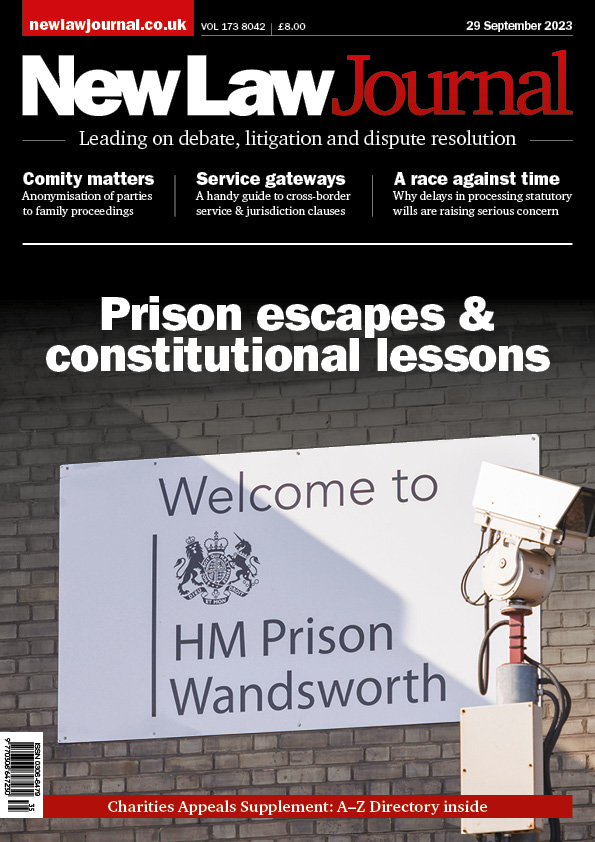
Roger Smith muses on breakouts, scapegoats & political expediencies
Delays in the processing of statutory wills are causing serious issues with estate distribution: Gareth Williams proposes a simple solution
Janna Purdie provides a handy guide to cross-border service & jurisdiction clauses
Using foul language on social media is fine but posting dishonest or discriminatory material online is not, according to guidance issued by the Bar Standards Board (BSB)
Cafcass has this week activated its prioritisation protocol for the London area following discussions with judges in West London, East London and the Central family courts
NLJ's latest Charities Appeals Supplement has been published in this week's issue

MOVERS & SHAKERS


Gateley Legal—Jack Kelly
Gateley Legal expands Midlands residential development team

Gibson Dunn—Richard Surtees
Gibson Dunn adds employee benefits and executive compensation practice in London with partner Richard Surtees

Laytons ETL—Alec Cameron
Laytons ETL appoints new partner and head of intellectual property disputes
NEWS
A series of recent decisions has clarified important principles across property law, from perpetuities to lease renewals and public rights over land
A series of recent decisions has clarified important principles across property law, from perpetuities to lease renewals and public rights over land
Employers cannot rely on wellbeing services alone to defend workplace stress claims after a High Court decision awarding almost £1m to an overworked employee
Andy Burnham's brand of 'Manchesterism' could offer fresh thinking on legal aid and access to justice if it reaches Westminster, according to Roger Smith, NLJ columnist and former director of JUSTICE
The constitutional fallout from a change of prime minister, rather than the politics, is under scrutiny as questions arise over the limits of executive authority in a leadership transition
Copyright © 2026 LexisNexis

