

THIS ISSUE
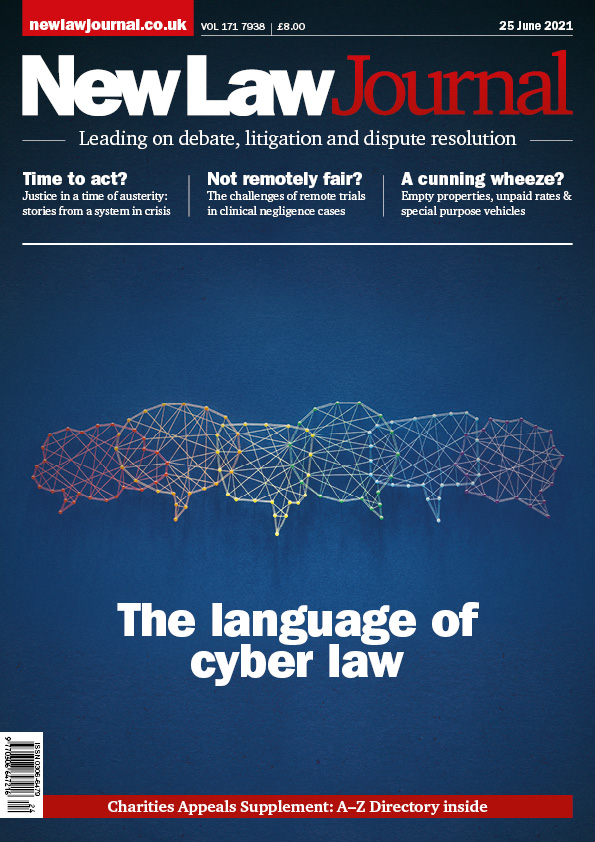

NLJ's Charities Appeals Supplement has been published in this week's issue
Charities lost out but will writing peaked as news coverage sent memento mori to the nation
Those who bore the brunt of the pandemic also suffer disproportionately from a broken justice system, NLJ columnist Jon Robins writes in this week’s NLJ
Has the wig had its day in court? It’s a debate that’s raged for years but tradition has always triumphed

Debra Burton & Tamsin Wooldridge outline the sobering impact of the pandemic on charities & its effect on legacy income
Roderick Ramage shows how parliamentary draftsmen sowed confusion by trying to avoid ambiguity
Is it time for the UK to consider financial rewards for whistleblowers? John Bowers QC weighs up the pros & cons
James Yapp weighs up the benefits & challenges of remote trials in clinical negligence cases
Jonathan Landau considers key proposals for reforming the Coroner Service—and how likely they are to materialise
Mrs Justice Keegan is to be appointed as the first Lady Chief Justice of Northern Ireland

MOVERS & SHAKERS


Gateley Legal—Jack Kelly
Gateley Legal expands Midlands residential development team

Gibson Dunn—Richard Surtees
Gibson Dunn adds employee benefits and executive compensation practice in London with partner Richard Surtees

Laytons ETL—Alec Cameron
Laytons ETL appoints new partner and head of intellectual property disputes
NEWS
A series of recent decisions has clarified important principles across property law, from perpetuities to lease renewals and public rights over land
Employers cannot rely on wellbeing services alone to defend workplace stress claims after a High Court decision awarding almost £1m to an overworked employee
Andy Burnham's brand of 'Manchesterism' could offer fresh thinking on legal aid and access to justice if it reaches Westminster, according to Roger Smith, NLJ columnist and former director of JUSTICE
The constitutional fallout from a change of prime minister, rather than the politics, is under scrutiny as questions arise over the limits of executive authority in a leadership transition
The legal profession is undergoing a fundamental shift from selling services to creating technology-enabled products, according to Professor Luke Mason, Head of School of Law at Regent's University London
Copyright © 2026 LexisNexis

