


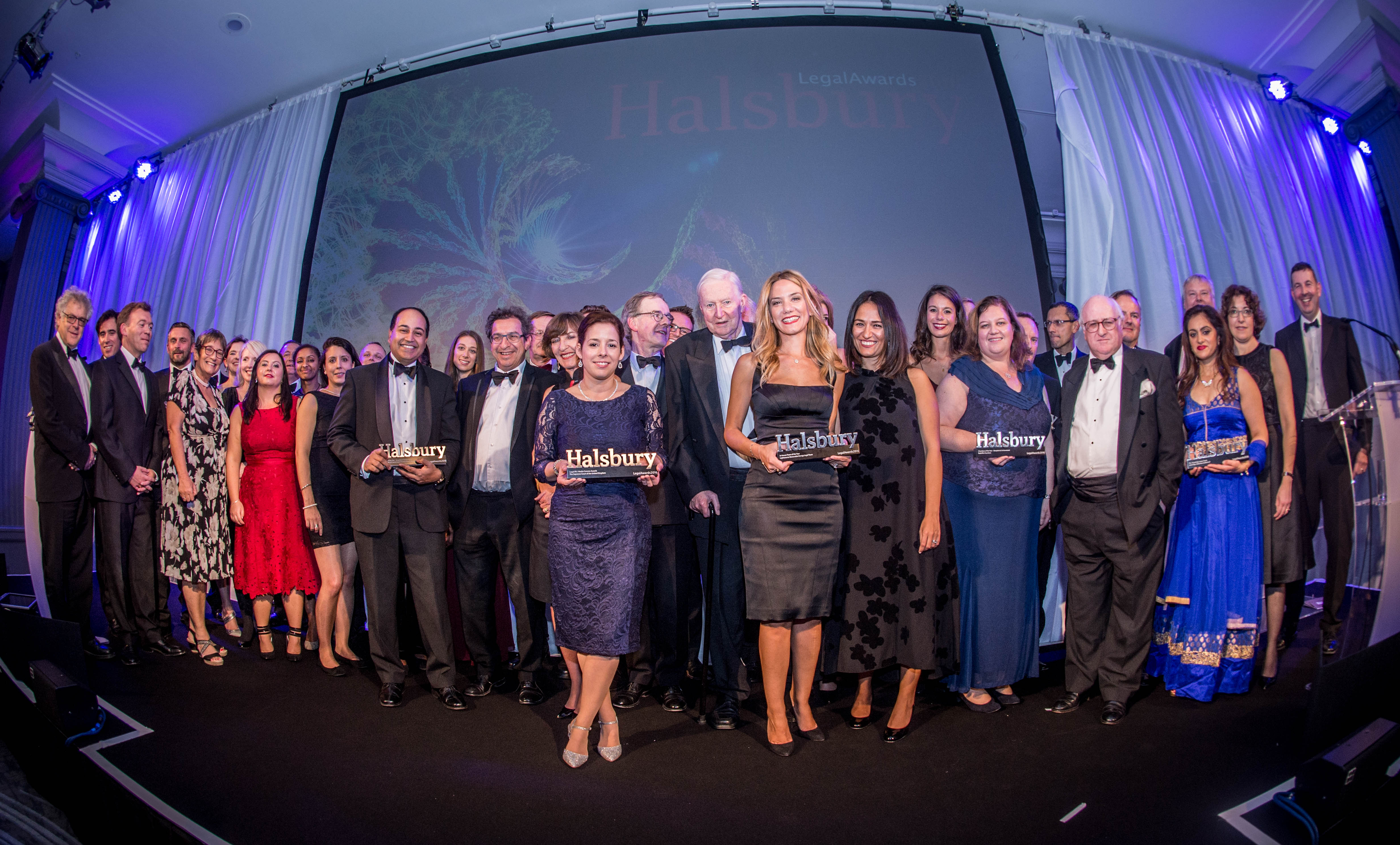
Awards return for fourth year to celebrate legal excellence
Finalists, sponsors and guests enjoyed a sparkling awards event at this year’s Halsbury Legal Awards presentation at the Grosvenor House Hotel in Park Lane.
The awards, which are designed to celebrate the contributions and achievements of remarkable people across the legal profession, were presented across 10 categories including: Chambers of the Year; Law Firm of the Year; Business Development; Law in the Community/Pro Bono; Innovation; Diversity & Inclusion.
Special awards were also presented to Professor William Twining for Academic Contribution, to Lord Lester for Lifetime Contribution, and to Hillsborough lawyers, Marcia Willis Stewart and Elkan Abrahamson for their remarkable contribution to the Rule of Law.
The 2016 charity partner was the International Law Book Facility (ILBF)
ILBF patron, Lord Thomas, the Lord Chief Justice spoke about the charity’s history, achievements and ambitions.
Christian Fleck, Managing Director for LexisNexis UK and Ireland, said: “As a business, we are committed to advancing the rule of law around the world. The sharing of legal knowledge and best practice is a vital part of that, which makes the ILBF an ideal charity partner for us.
Knowledge of and access to the laws can help to protect basic human rights, as well as advance legal practice and the development of laws. As such, the importance of providing quality legal texts to practitioners, students, prisoners and administrators around the world cannot be underestimated, and this is where the ILBF plays a pivotal role. The future success of the ILBF relies on continued backing from both within and outside the legal profession.
We are delighted to support this endeavour through the awards, continuing a relationship that started 10 years ago.”
Speaking on behalf of the charity Paul Lowenstein QC, chair of trustees, said: “The ILBF is thrilled to be the charity partner of the Halsbury Legal Awards tonight. LexisNexis has been a constant supporter since the foundation of the ILBF over 10 years' ago; in that time the ILBF has made a huge difference to the development of the rule of law across the world through the provision of good quality legal texts. The Halsbury Legal Awards give the ILBF a wonderful platform to continue to raise awareness of our work to a prestigious audience.”
This year’s event was generously sponsored by: The 36 Group, 3PB, Edwin Coe, Hound Promotions, Legal Cost Finance, Netwealth Investments, NobleLEGAL,and PX Paralegal.
A full list of the 2016 award winners is online.
#Halsbury2016




