


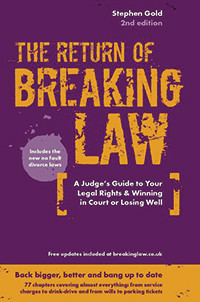
Author: Stephen Gold
Publisher: Bath Publishing
ISBN: 9781838439002
RRP: £25.00
Thanks to a very wealthy benefactor, I have been supplied over the last 18 months with several tomes penned by distinguished lawyers. All have contained a few nuggets of wisdom. A Judge’s Journey by Lord Dyson dished the dirt on lazy judges and how loose talk nearly destroyed a Supreme Court hearing. The diaries of Lord Hope delivered an astonishing insight into the arrival of Lady Hale at the Supreme Court.
However, for those concerned with real legal problems rather than catty gossip, The Return of Breaking Law is the legal publication of the year, again.
Back in 2016, I adored the first edition. We now have an expanded edition which is even more comprehensive. Our new Master of The Rolls, Sir Geoffrey Vos, is a force of nature and a great pragmatist. In a speech a few months ago, he recognised something that many senior judges have missed. Those cases involving charterparties (whatever they are) and reflective loss (me neither) are far removed from the world our citizens inhabit. What really matters are problems that one might actually encounter.
The genius of Stephen Gold is that he recognises those issues. Indeed, he appears to have been in more scrapes than anyone I have ever met. Bad spelling on a Waitrose cake, Marks & Spencer doing strange things with his ISA, broken water filter cartridges, and being overcharged by retailers are just some of the problems he has confronted head on.
His letters of complaint are helpfully reproduced, as are some of the replies seeking to fob him off. Perseverance, we see, inevitably pays off. Precedent letters and claim form content abounds. The heavy lifting is done.
Might I just interject here that, in my experience as a serious shopper, no pricing error has ever been in my favour. Retailers regularly ask if one wants a receipt, to which the only correct answer is yes. One can scrutinise the damage and have evidence of payment. Mr Gold addresses shoplifting allegations at page 492. The topic could usefully be given an entry in the index next time round.
What I find staggering is the scope of this work and the practical advice delivered in plain English. Car parking penalties, inheritance claims, drink driving (a topic of particular personal interest to so many lawyers) and flight delays are here. The golden touch is that this former district judge is a wonderful ‘explainer’. One can see why over the years he has monopolised the airwaves; what is the recipe today Jim?
Disputes between landlords and tenants are escalating as the buy-to-let market roars on and industrious individuals have no choice but to rent. Again, wisdom gushes.
Approximately 100 pages of the 77 chapters deal with relationships. While tricky when the only clients were Adam and Eve, today the landscape is horrific. Prenuptial agreements, cohabitation, marriage, divorce and maintenance are exquisitely explained. ‘No sex please, we’re British’, a farce from 1971, now emerges as chapter 73 for those who want a chaste togetherness.
Those in debt will learn lots about enforcement and bailiffs, although there is no entry in the index for the B word. A review of the index would be a good idea; it is not the responsibility of our author.
Even if you are not in legal trouble (yet), Stephen Gold tells the story of his career in scintillating style. His entry into the legal profession is hilarious. Despite being a former examiner in employment law for the Law Society, I have never seen an obligation imposed upon a trainee or indeed anyone else to ‘cheerfully obey’ the instructions of his principal.
Unlike many a legal expert, Gold practised. To be personal adviser to the Kray twins was an astonishing accolade. Bad service would, I suspect, attract a penalty which the Solicitors Regulation Authority could not impose. Such though was the talent of their solicitor that the boys purchased him an expensive, inscribed watch. I sniggered away at how Ronnie and Reggie charmed the Inland Revenue visitors to their prison. Having arrived in pursuit of loot, they left a few hours later, empty-handed and starstruck by the charm of the duo.
£25 is the cost of this book: that might purchase six minutes of a solicitor’s time. Those who are lawyers such as me and Peter Thompson QC will learn something—perhaps an awful lot—from this magnificent work. Buy it now.
Reviewer: Professor Dominic Regan of City Law School, director of training at Frenkel Topping Group & NLJ columnist (@krug79).





