


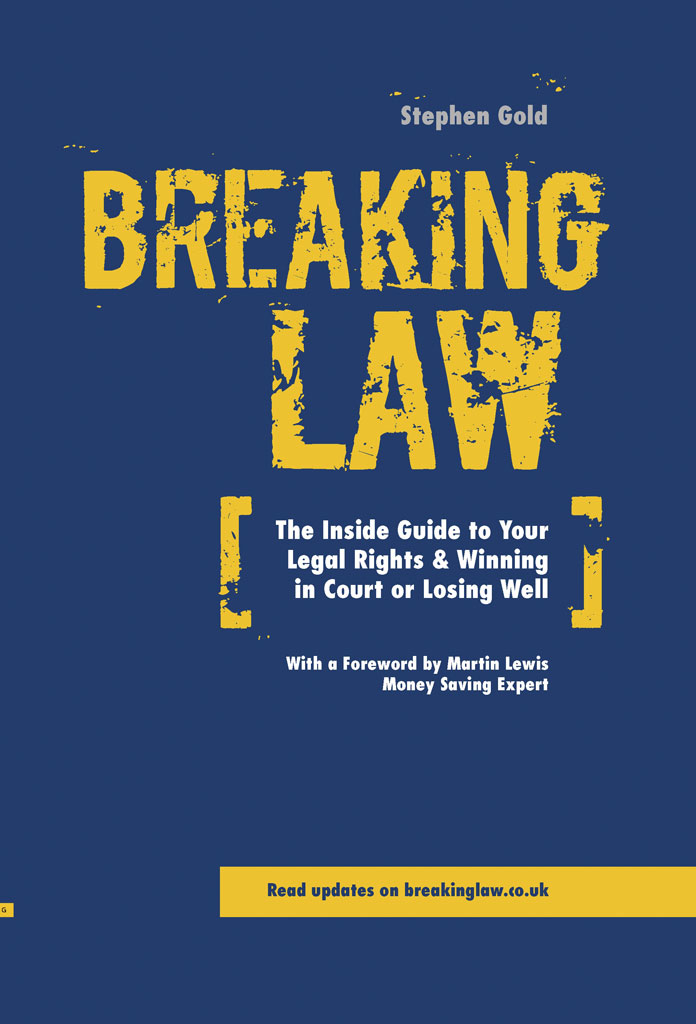
"This is unquestionably the legal book of the year if not the last decade"
Author: Stephen Gold
Publisher: Bath Publishing
ISBN: 9780993583605
Price: £19.99
Make no mistake. This is a work of genius, produced by Stephen Gold, he of the invaluable NLJ “Civil Way” column. I read it in one sitting and on a hot August day, rather than whilst in quarantine with nothing better to do. On several occasions I howled with laughter.
District Judge Gold, as he was until recent retirement, was never meant to be a lawyer. His tremendous sense of fun and wit mark him out to be an entertainer and indeed he was seeking work in television at the age of 15. After getting five O levels he persevered in the search for a five-year long training contract. This he secured on the basis that he would not be paid but two years in he was put on a fiver a week. He learnt the bad ways of clients very quickly and by page 8 we have already had buggery and incest. Dame Barbara Cartland would not be troubled by this competitor.
For many, his greatest practical achievement was to be retained by the Kray Brothers. Reg was a regular reader of this very magazine. Mr Gold would drop copies off when dealing with the regular flow of work the boys generated. The fact that they gave our author an affectionately inscribed watch suggests they were pleased with his services. Two tales stand out. The first is of two Inland Revenue officers arranging a visit upon learning that fees would be received from the making of a film based upon the boys. “A daytime cabaret” of stories captivated the civil servants who were so charmed that they went away and the question of tax was seemingly abandoned. The other, demonstrating the tenacity of this fine solicitor, concerned the search for the stolen brain of Ronnie; you could not make it up.
Legal guide
We then move from autobiography to legal guide. The target audience is plainly the lay reader. However, I vow that every lawyer in the land will learn from this work. Consumer law is where Mr Gold excels. Indeed, on reflection I would suggest that every retailer in the land should buy this book to see where they are getting it wrong. I did not realise that I could involve a credit card company where only a meagre part of the minimum £100 spend was put on the card.
Rejection of defective goods is splendidly explained in the pure prose of this captivating author.
The dapper dandy that is Mr Gold has had run-ins with the cream of the high street. Documented in detail are spats with Waitrose, Marks & Spencer, Tesco (a cucumber issue) and Jaeger where vast sums have been spent on shirts. True letters of complaint and precedent claims are supplied by our valiant shopper who leaves no nectarine unturned. His serious explanation of the underlying law is astonishing. Some will remember the lovely fictional works by AP Herbert about Albert Haddock who regularly had a tilt at the law. Mr Gold is his living embodiment.
There is only one serious reservation I have and it is down to the editor I fear. At page 385 the judge describes making his first possession order for a debt of £1m. Just 15 pages are devoted to the terrifying prospect of repossession. Seven pages deal with the nightmare of domestic violence.
The reader more concerned with the threat of bankruptcy than being overcharged for two creme eggs might appreciate more on the former topic. The insolvency options are explained magnificently. Crime and motoring offences, apart from those committed by Mr Gold, get minor attention.
Profession laid bare
The antics of lawyers and clients provide more hilarity. The litigant exposing maximum bosom did not get favourable treatment. Who am I to doubt the integrity of the judge. A few malcontents complained about him over the years. They got nowhere.
My favourite tale was of the action brought by a claimant because the defendant had stared at them in a supermarket! I was also pleased to see that he never forgave Leon Britton QC, whom he had instructed, for being curt. Some barristers saw solicitors as low life. Thankfully, we have moved on.
At page 159 we have the statement that every lawyer will appreciate: “An expert is someone who tells you what you already know but in words you cannot understand.” Bullseye.
Breaking Law is wildly entertaining and thoroughly informative. The next edition, and there will be many more to come, needs to either devote itself to mainstream consumer issues or beef up the segments which deal with money and domestic violence.
This is unquestionably the legal book of the year if not the last decade. You will not get better value for £19.99. And if it falls apart after a week you will know precisely what your rights are.
Reviewer Dominic Regan




