
header-logo header-logo

25 February 2022
Issue: 7968 / Categories: Features , Aviation
printer mail-detail

Airline strikes: extraordinary circumstances?

73190
Lee Finch & Ann-Marie O’Neil examine the high threshold for determining which events are outside an airline’s control
  • Industrial action by an airline carrier’s employees touching on their conditions of employment did not amount to an ‘extraordinary circumstance’ for the purposes of Art 5(3) of Regulation (EC) 261/2004.
  • Where flights are cancelled as the result of such strikes, carriers are liable to pay compensation to the affected passengers.
  • Involved consideration of CJEU decisions which had been issued after the end of the implementation period.

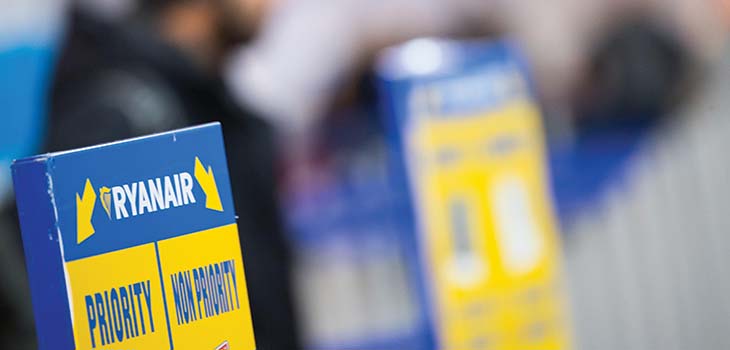
Ryanair recognised unions for the first time in December 2017. Subsequently, unions in multiple jurisdictions commenced negotiations with Ryanair. The Irish union, Fórsa, made 11 demands in relation to the seniority structure among Irish pilots. Ryanair argued that these demands could not be satisfied as they would compromise its business model and ability to operate as a low-cost airline. As a result of the failed negotiations, pilots and cabin crew employed by Ryanair went on strike in July, August and September 2018.

The strike caused the cancellation of multiple Ryanair flights scheduled to leave the UK which, prima facie,

If you are not a subscriber, subscribe now to read this content
If you are already a subscriber sign in
...or Register for two weeks' free access to subscriber content

MOVERS & SHAKERS

Hogan Lovells—Lisa Quelch

Hogan Lovells—Lisa Quelch

Partner hire strengthens global infrastructure and energy financing practice

Sherrards—Jan Kunstyr

Sherrards—Jan Kunstyr

Legal director bolsters international expertise in dispute resolution team

Muckle LLP—Stacey Brown

Muckle LLP—Stacey Brown

Corporate governance and company law specialist joins the team

NEWS

NOTICE UNDER THE TRUSTEE ACT 1925

HERBERT SMITH STAFF PENSION SCHEME (THE “SCHEME”)

NOTICE TO CREDITORS AND BENEFICIARIES UNDER SECTION 27 OF THE TRUSTEE ACT 1925
Law firm HFW is offering clients lawyers on call for dawn raids, sanctions issues and other regulatory emergencies
From gender-critical speech to notice periods and incapability dismissals, employment law continues to turn on fine distinctions. In his latest employment law brief for NLJ, Ian Smith of Norwich Law School reviews a cluster of recent decisions, led by Bailey v Stonewall, where the Court of Appeal clarified the limits of third-party liability under the Equality Act
Non-molestation orders are meant to be the frontline defence against domestic abuse, yet their enforcement often falls short. Writing in NLJ this week, Jeni Kavanagh, Jessica Mortimer and Oliver Kavanagh analyse why the criminalisation of breach has failed to deliver consistent protection
Assisted dying remains one of the most fraught fault lines in English law, where compassion and criminal liability sit uncomfortably close. Writing in NLJ this week, Julie Gowland and Barny Croft of Birketts examine how acts motivated by care—booking travel, completing paperwork, or offering emotional support—can still fall within the wide reach of the Suicide Act 1961
back-to-top-scroll
