

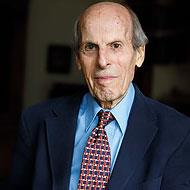
Michael Zander KC
Emeritus professor
Michael Zander KC, NLJ columnist & Emeritus Professor, LSE. Newlawjournal.co.uk


Opposition on all sides: Michael Zander KC reports on the House of Lords Committee stage of the Retained EU Law (Revocation and Reform) Bill
The Retained EU Law (Revocation and Reform) Bill: the criticisms mount. Michael Zander KC examines the scathing reports of two parliamentary committees
The government’s action plan on conviction rates in rape cases has been based upon a fundamentally flawed premise, as Michael Zander KC explains
A seriously alarming piece of legislation? Michael Zander KC continues his report on the Retained EU Law (Revocation and Reform) Bill
Michael Zander reports on a warning from Sir Jeffrey Jowell: fundamental safeguards are at stake
Michael Zander KC reports on the Retained EU Law (Revocation & Reform) Bill
Michael Zander suggests that argument over tweaking of the statutory tests is a waste of everyone’s time
"One feels that one is experiencing some of the horror of living under an evil regime and what it takes to oppose such a regime as a lawyer."
MOVERS & SHAKERS


Gateley Legal—Jack Kelly
Gateley Legal expands Midlands residential development team

Gibson Dunn—Richard Surtees
Gibson Dunn adds employee benefits and executive compensation practice in London with partner Richard Surtees

Laytons ETL—Alec Cameron
Laytons ETL appoints new partner and head of intellectual property disputes
NEWS
A series of recent decisions has clarified important principles across property law, from perpetuities to lease renewals and public rights over land
Employers cannot rely on wellbeing services alone to defend workplace stress claims after a High Court decision awarding almost £1m to an overworked employee
Andy Burnham's brand of 'Manchesterism' could offer fresh thinking on legal aid and access to justice if it reaches Westminster, according to Roger Smith, NLJ columnist and former director of JUSTICE
The constitutional fallout from a change of prime minister, rather than the politics, is under scrutiny as questions arise over the limits of executive authority in a leadership transition
The legal profession is undergoing a fundamental shift from selling services to creating technology-enabled products, according to Professor Luke Mason, Head of School of Law at Regent's University London
Copyright © 2026 LexisNexis

