

THIS ISSUE
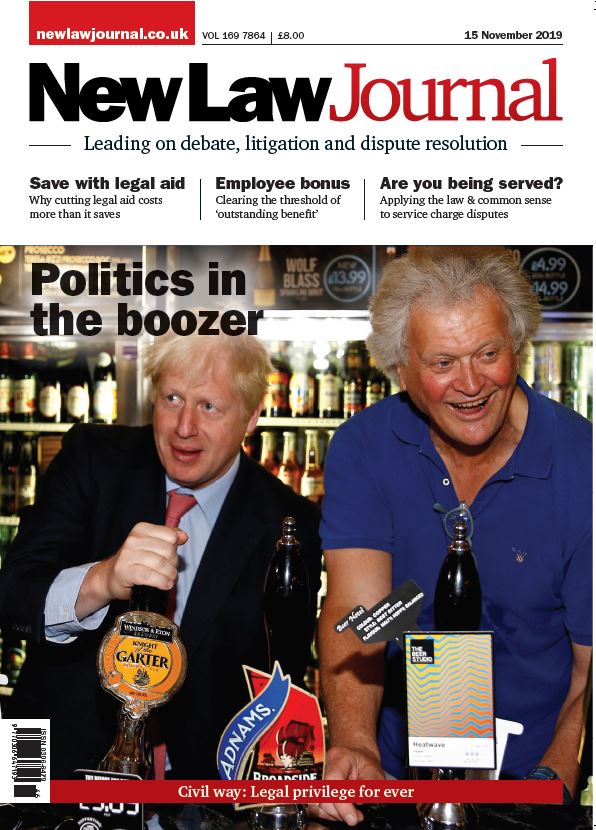

The government’s sledgehammer approach to legal aid benefits neither access to justice nor the public purse, says Geoffrey Bindman

Alec Samuels discusses challenging service charges
Masood Ahmed reports on the interpretation & application of the ‘additional amount’ under Pt 36
Early cash; ADR: agree it, do it; eternally privileged; look, no boarding card
John McMullen provides an update on the automatic transfer principle & its effects
Peter Stevens traces the recent history of compensation awards for employee inventors
Nearly 60% of expert witnesses believe judges should have powers to permanently disqualify experts who don’t understand their role.
The main challenge law firms face with e-billing is the way in which they record their time, according to a report.
The Junior Lawyers Division (JLD) has warned that the Solicitors Qualifying Exam (SQE) ‘poses significant risks to the standing and credibility (both domestically and internationally) of the solicitor qualification’.

MOVERS & SHAKERS


Gateley Legal—Jack Kelly
Gateley Legal expands Midlands residential development team

Gibson Dunn—Richard Surtees
Gibson Dunn adds employee benefits and executive compensation practice in London with partner Richard Surtees

Laytons ETL—Alec Cameron
Laytons ETL appoints new partner and head of intellectual property disputes
NEWS
A series of recent decisions has clarified important principles across property law, from perpetuities to lease renewals and public rights over land
A series of recent decisions has clarified important principles across property law, from perpetuities to lease renewals and public rights over land
Employers cannot rely on wellbeing services alone to defend workplace stress claims after a High Court decision awarding almost £1m to an overworked employee
Andy Burnham's brand of 'Manchesterism' could offer fresh thinking on legal aid and access to justice if it reaches Westminster, according to Roger Smith, NLJ columnist and former director of JUSTICE
The constitutional fallout from a change of prime minister, rather than the politics, is under scrutiny as questions arise over the limits of executive authority in a leadership transition
Copyright © 2026 LexisNexis

