

THIS ISSUE
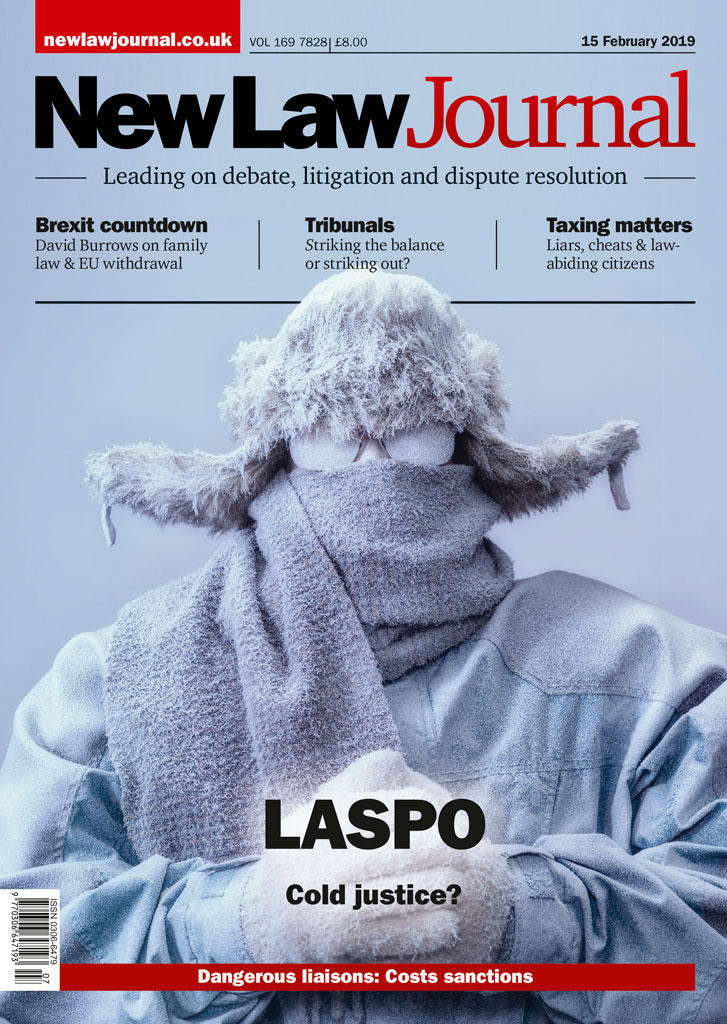


Where is family law today in relation to EU withdrawal? David Burrows fills the gaps
Jon Robins finds some flickers of hope in the LASPO review, while Geoffrey Bindman laments a missed opportunity for change
When should the justice of case proceedings prevail over hardnosed case management practice? Shane Crawford investigates
One size fits none. In the pursuit of compliance, HMRC has chosen to treat everyone like a tax cheat, says Peter Vaines
Jenna Coad & David O’Brien reflect on lessons from Giambrone & the award of non-party costs orders in a discretionary jurisdiction
Dominic Regan provides an updated cut out & keep guide to surviving sanctions
It’s not a question of if but when this new technology will start to transform law firms, so the time to prepare is now, says Jeffrey Catanzaro
Alec Samuels reflects on bias—especially political bias—in the judiciary
Lawyers label extra funding ‘but a drop in the ocean’

MOVERS & SHAKERS


Gateley Legal—Jack Kelly
Gateley Legal expands Midlands residential development team

Gibson Dunn—Richard Surtees
Gibson Dunn adds employee benefits and executive compensation practice in London with partner Richard Surtees

Laytons ETL—Alec Cameron
Laytons ETL appoints new partner and head of intellectual property disputes
NEWS
A series of recent decisions has clarified important principles across property law, from perpetuities to lease renewals and public rights over land
A series of recent decisions has clarified important principles across property law, from perpetuities to lease renewals and public rights over land
Employers cannot rely on wellbeing services alone to defend workplace stress claims after a High Court decision awarding almost £1m to an overworked employee
Andy Burnham's brand of 'Manchesterism' could offer fresh thinking on legal aid and access to justice if it reaches Westminster, according to Roger Smith, NLJ columnist and former director of JUSTICE
The constitutional fallout from a change of prime minister, rather than the politics, is under scrutiny as questions arise over the limits of executive authority in a leadership transition
Copyright © 2026 LexisNexis

