
header-logo header-logo

19 June 2026 / Neil Parpworth
Issue: 8166 / Categories: Features , Public , Human rights
printer mail-detail

To ban or not to ban?

252782
© NEIL HALL/EPA/Shutterstock
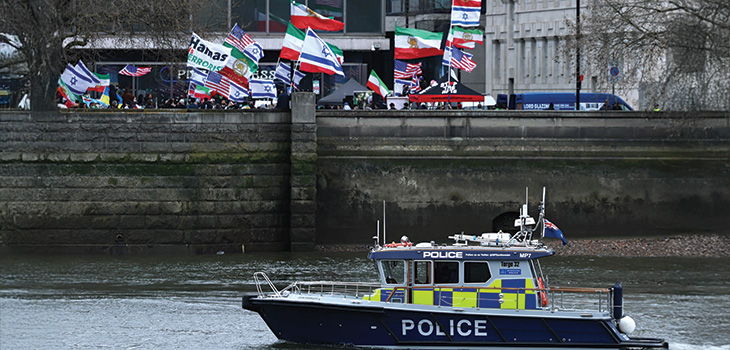
Neil Parpworth considers the decision to ban the Al Quds march & associated counter-protests
  • Looks at s 13, Public Order Act 1986, when and under what circumstances it is used, and the political and legal context around a recent ban on public processions in London.

Banning public processions is not a course of action which is often taken in England and Wales. Thus, writing in 1985, LH Leigh noted that ‘in the period from 1951 to 1979, only nine banning orders were made in England and Wales’. As he proceeded to observe, ‘the power to ban is obviously highly sensitive politically in a free society, and of this chief officers of police are well aware’: see Police Powers in England and Wales (1985, 2nd ed) Butterworths, p196.

Following the enactment of the Human Rights Act 1998, any proposed banning order is now potentially subject to legal challenge on the grounds that it represents a disproportionate and unreasonable interference with freedom of expression and the right to peaceful assembly, as protected by Arts 10 and 11 of the European Convention

If you are not a subscriber, subscribe now to read this content
If you are already a subscriber sign in
...or Register for two weeks' free access to subscriber content

MOVERS & SHAKERS

Gateley Legal—Jack Kelly

Gateley Legal—Jack Kelly

Gateley Legal expands Midlands residential development team

Gibson Dunn—Richard Surtees

Gibson Dunn—Richard Surtees

Gibson Dunn adds employee benefits and executive compensation practice in London with partner Richard Surtees

Laytons ETL—Alec Cameron

Laytons ETL—Alec Cameron

Laytons ETL appoints new partner and head of intellectual property disputes

NEWS
A series of recent decisions has clarified important principles across property law, from perpetuities to lease renewals and public rights over land
Employers cannot rely on wellbeing services alone to defend workplace stress claims after a High Court decision awarding almost £1m to an overworked employee
Andy Burnham's brand of 'Manchesterism' could offer fresh thinking on legal aid and access to justice if it reaches Westminster, according to Roger Smith, NLJ columnist and former director of JUSTICE
The constitutional fallout from a change of prime minister, rather than the politics, is under scrutiny as questions arise over the limits of executive authority in a leadership transition
The legal profession is undergoing a fundamental shift from selling services to creating technology-enabled products, according to Professor Luke Mason, Head of School of Law at Regent's University London
back-to-top-scroll
