


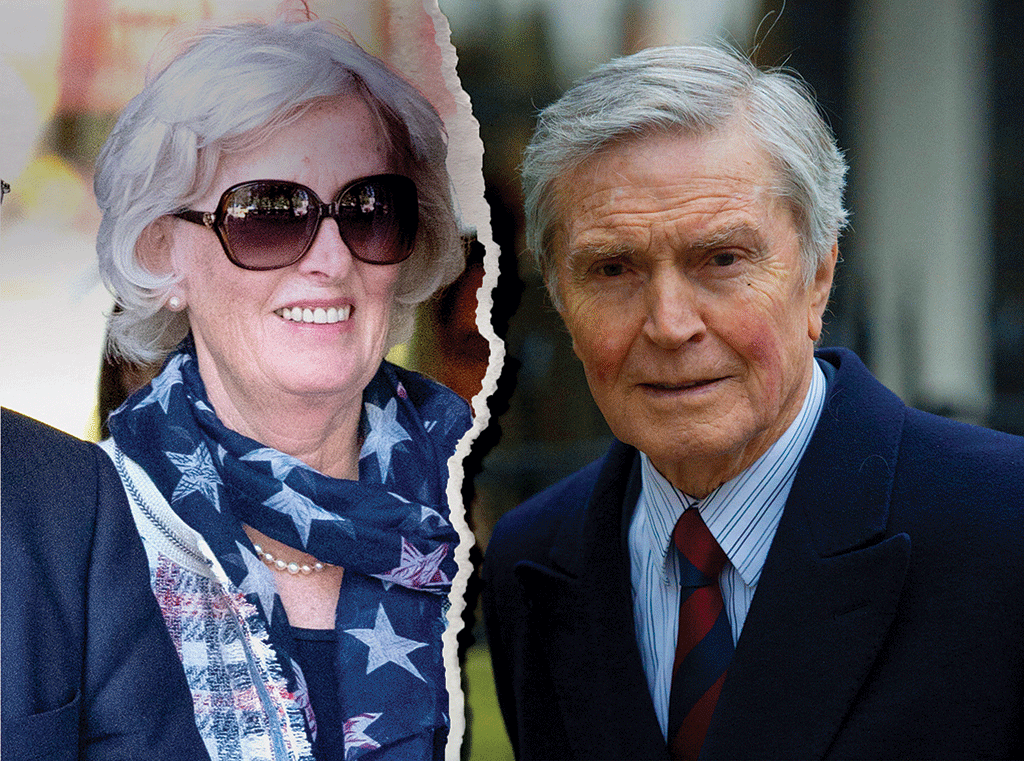
Tini Owens has lost her appeal to be granted a divorce after she failed to prove unreasonable behaviour.
In a unanimous verdict, the Supreme Court upheld the earlier courts’ decisions that Mrs Owens would not be granted a divorce despite an unhappy relationship. Both courts had found that the husband’s behaviour had been tantamount to ‘minor altercations of a kind to be expected in a marriage’. Hugh Owens has refused to divorce his wife, leaving Mrs Owens no option but to wait for a further two years of separation before she can obtain a divorce.
Hugh Owens’s barrister Hamish Dunlop, head of 3PB Barristers Family Law Group, said: ‘The Supreme Court has rightly rejected Mrs Owens’s attempt to reinterpret the requirements for a behaviour divorce brought under the Matrimonial Causes Act 1973. In bringing her appeal, she was essentially advocating divorce by unilateral demand of the petitioner; ignoring the court’s duty to have some objective regard to the respondent’s behaviour.’
Simon Beccle, Tini Owens's solicitor and partner at Payne Hicks Beach, said: ‘Naturally, Mrs Owens is devastated by this decision which means that she cannot move forward with her life and obtain her independence from Mr Owens.
‘While the decision of the Supreme Court has confirmed that the interpretation of the law as it stands has not changed in over four decades, it underlines the urgent need for Parliament to change the law to allow couples to divorce with greater dignity—by bringing in so-called no fault or no conduct divorce—without them having to trawl over their conduct or behaviour towards one another which so often has an early and adverse effect on resolving issues relating to finances and children which is most unfortunate.’
The Law Commission has also urged the government to look again at no-fault divorce. Law Commissioner Professor Nick Hopkins said: ‘Decades ago [1990] we recommended the introduction of no-fault divorce. Clearly, it would be a welcome step for the government to look again to see if reform is needed. Reform isn’t about making it easier to divorce, but about reducing hostility between two people at a time of high stress and tackling a law which is unhelpful and unjust.’





