
header-logo header-logo

13 May 2010 / John Cooper KC
Issue: 7417 / Categories: Opinion , Local government , Public , Human rights
printer mail-detail

Surveillance society

comment_6_4

“I will not be pushed, filed, stamped, indexed, briefed, debriefed, or numbered!”

“I will not be pushed, filed, stamped, indexed, briefed, debriefed, or numbered!”

So declared Number Six in the ground-breaking 1967 television series The Prisoner.

At the time of its production, the world was gripped in a Cold War, where surveillance and the gathering of data was an integral part of the way countries protected themselves. Number Six represented a challenge to this, as he would shout from the shoreline of The Village: “I am not a number, I am a free man!”

So what has changed?

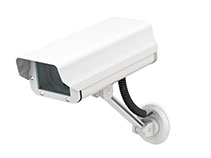
The UK is one of the three top surveillance states in the world, next to China and Russia. In Britain there are presently over five million CCTV cameras recording our lives. Databases have been created for almost every facet of human behaviour, from shopping habits through club cards, to the surveillance promised land of mobile phones and the internet.
We are reassured that they are controlled by legislation and most specifically, the Data Protection Act 1998. But does it really work?
The data

If you are not a subscriber, subscribe now to read this content
If you are already a subscriber sign in
...or Register for two weeks' free access to subscriber content

MOVERS & SHAKERS

Gateley Legal—Jack Kelly

Gateley Legal—Jack Kelly

Gateley Legal expands Midlands residential development team

Gibson Dunn—Richard Surtees

Gibson Dunn—Richard Surtees

Gibson Dunn adds employee benefits and executive compensation practice in London with partner Richard Surtees

Laytons ETL—Alec Cameron

Laytons ETL—Alec Cameron

Laytons ETL appoints new partner and head of intellectual property disputes

NEWS
A series of recent decisions has clarified important principles across property law, from perpetuities to lease renewals and public rights over land
Employers cannot rely on wellbeing services alone to defend workplace stress claims after a High Court decision awarding almost £1m to an overworked employee
Andy Burnham's brand of 'Manchesterism' could offer fresh thinking on legal aid and access to justice if it reaches Westminster, according to Roger Smith, NLJ columnist and former director of JUSTICE
The constitutional fallout from a change of prime minister, rather than the politics, is under scrutiny as questions arise over the limits of executive authority in a leadership transition
The legal profession is undergoing a fundamental shift from selling services to creating technology-enabled products, according to Professor Luke Mason, Head of School of Law at Regent's University London
back-to-top-scroll
