
header-logo header-logo

17 January 2020
Issue: 7871 / Categories: Legal News , Profession
printer mail-detail

Silks by numbers: the 2020 roll call

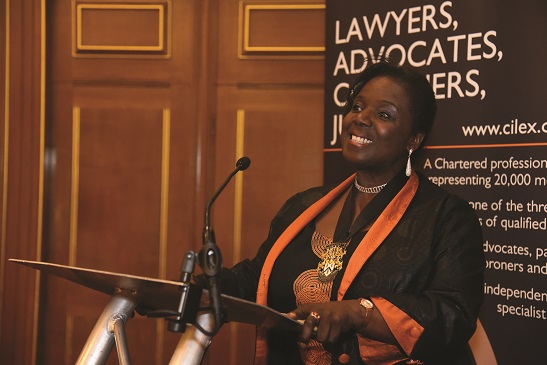
Some 114 lawyers attained the prestigious grade of Queen’s Counsel last week, while ten were appointed Honorary QCs in the latest silk list―including the first Chartered Legal Executive QC, former CILEx president Millicent Grant (pictured).

Some 114 lawyers attained the prestigious grade of Queen’s Counsel this week, while ten were appointed Honorary QCs in the latest silk list―including the first Chartered Legal Executive QC, former CILEx president Millicent Grant (pictured).

The new silks include 30 women, out of 52 who applied, and 22 black and ethnic minority (BAME) applicants out of 42 who applied, compared to 13 BAME QCs in last year’s round. Four solicitor advocates were successful, of nine who applied.

The youngest successful applicant is 37 years old, and the oldest is 60. Some 26 applicants aged over 50 were appointed.

Sir Alex Allan, Chair of the Selection Panel, said: ‘I congratulate each one of them.  

‘The selection process is a rigorous and demanding one. We remain concerned that the number of female applicants remains comparatively low, but I am pleased that of those women who did apply, almost 60% were successful. I was also pleased to note that a record number of 22 BAME applicants were appointed.’

In total, 258 lawyers applied for silk, of which 181 reached the interview stage. The next round is expected to start next month.

Honorary QCs are awarded to those who have made a major contribution to the law outside the courts. CILEx board member Millicent Grant was the first person from a BAME background to lead a legal professional body and has championed the advancement of Legal Executive Lawyers in the legal profession and judiciary, as well as diversity and social mobility throughout her career to date.

Grant said: ‘I am a big believer that there is more than one route into the law and that CILEx, with its diverse membership, has an important role to play in bringing people from a range of different backgrounds into the legal profession.’

The new QCs will formally become silks at a ceremony on 16 March.

Issue: 7871 / Categories: Legal News , Profession
printer mail-details

MOVERS & SHAKERS

Hogan Lovells—Lisa Quelch

Hogan Lovells—Lisa Quelch

Partner hire strengthens global infrastructure and energy financing practice

Sherrards—Jan Kunstyr

Sherrards—Jan Kunstyr

Legal director bolsters international expertise in dispute resolution team

Muckle LLP—Stacey Brown

Muckle LLP—Stacey Brown

Corporate governance and company law specialist joins the team

NEWS

NOTICE UNDER THE TRUSTEE ACT 1925

HERBERT SMITH STAFF PENSION SCHEME (THE “SCHEME”)

NOTICE TO CREDITORS AND BENEFICIARIES UNDER SECTION 27 OF THE TRUSTEE ACT 1925
Law firm HFW is offering clients lawyers on call for dawn raids, sanctions issues and other regulatory emergencies
From gender-critical speech to notice periods and incapability dismissals, employment law continues to turn on fine distinctions. In his latest employment law brief for NLJ, Ian Smith of Norwich Law School reviews a cluster of recent decisions, led by Bailey v Stonewall, where the Court of Appeal clarified the limits of third-party liability under the Equality Act
Non-molestation orders are meant to be the frontline defence against domestic abuse, yet their enforcement often falls short. Writing in NLJ this week, Jeni Kavanagh, Jessica Mortimer and Oliver Kavanagh analyse why the criminalisation of breach has failed to deliver consistent protection
Assisted dying remains one of the most fraught fault lines in English law, where compassion and criminal liability sit uncomfortably close. Writing in NLJ this week, Julie Gowland and Barny Croft of Birketts examine how acts motivated by care—booking travel, completing paperwork, or offering emotional support—can still fall within the wide reach of the Suicide Act 1961
back-to-top-scroll
