
header-logo header-logo

05 February 2015 / David Greene
Issue: 7639 / Categories: Opinion , Procedure & practice , Profession
printer mail-detail

Profit & loss

greene

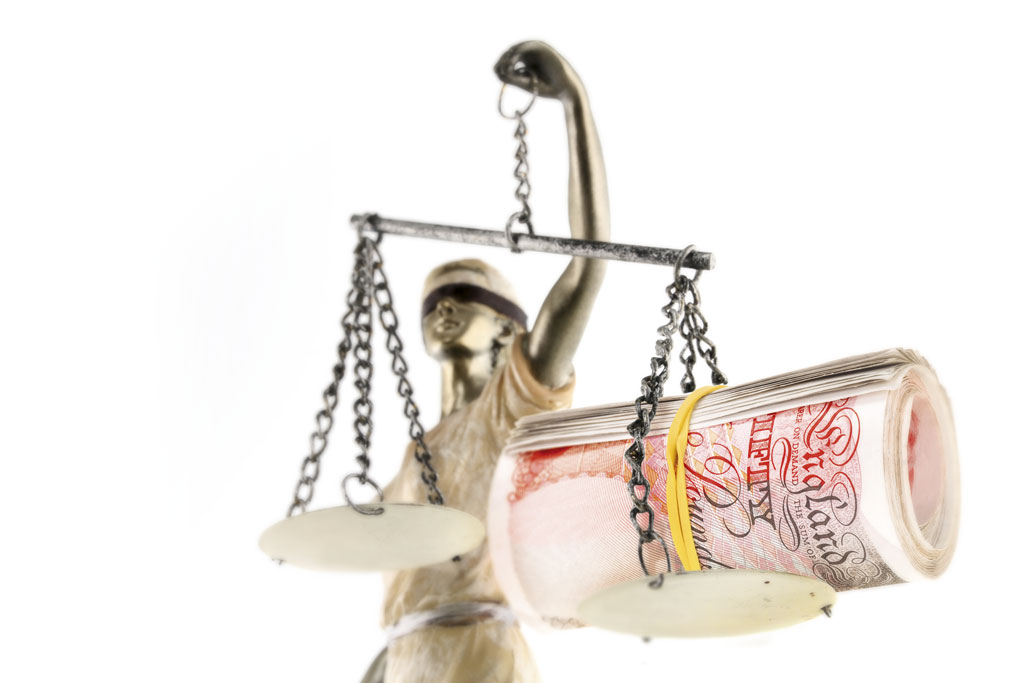
With the hike in court fees the government will make money at the expense of justice, says David Greene

It’s that time of year again; the annual hike in court fees to achieve the oft-stated goal of making the courts pay for themselves or, as some may see it, making the less well-off pay for our civil justice process. This year, however, there is a difference. It lies deep in s 180 of the Anti-social Behaviour Crime and Policing Act 2014. Civil court fees and crime may seem an odd mix but the Act is one of those modern legislative behemoths that is home to a disparate group of legislative hangers on. Much like the Consumer Rights Bill now on ping-pong from Commons to Lords.

Sea change

Section 180 marks a sea change in court fees because, contrary to established policy, it allows the Lord Chancellor to make a profit out of the fees charged for seeking the public court to resolve a dispute, or again as some might put it, securing access to justice.

The application of the section has allowed the

If you are not a subscriber, subscribe now to read this content
If you are already a subscriber sign in
...or Register for two weeks' free access to subscriber content

MOVERS & SHAKERS

Jurit LLP—Caroline Williams

Jurit LLP—Caroline Williams

Private wealth and tax team welcomes cross-border specialist as consultant

Freeths—Michelle Kirkland Elias

Freeths—Michelle Kirkland Elias

International hospitality and leisure specialist joins corporate team as partner

Flint Bishop—Deborah Niven

Flint Bishop—Deborah Niven

Firm appoints head of intellectual property to drive northern growth

NEWS
Talk of a reserved ‘Welsh seat’ on the Supreme Court is misplaced. In NLJ this week, Professor Graham Zellick KC explains that the Constitutional Reform Act treats ‘England and Wales’ as one jurisdiction, with no statutory Welsh slot
The government’s plan to curb jury trials has sparked ‘jury furore’. Writing in NLJ this week, David Locke, partner at Hill Dickinson, says the rationale is ‘grossly inadequate’
A year after the $1.5bn Bybit heist, crypto fraud is booming—but so is recovery. Writing in NLJ this week, Neil Holloway, founder and CEO of M2 Recovery, warns that scams hit at least $14bn in 2025, fuelled by ‘pig butchering’ cons and AI deepfakes
After Woodcock confirmed no general duty to warn, debate turns to the criminal law. Writing in NLJ this week, Charles Davey of The Barrister Group urges revival of misprision or a modern equivalent
Family courts are tightening control of expert evidence. Writing in NLJ this week, Dr Chris Pamplin says there is ‘no automatic right’ to call experts; attendance must be ‘necessary in the interests of justice’ under FPR Pt 25
back-to-top-scroll
