
header-logo header-logo

12 June 2026 / Jeffrey Wale
Issue: 8165 / Categories: Opinion , Public , Legal services
printer mail-detail

Open justice & unwanted consequences

252178
© Getty images
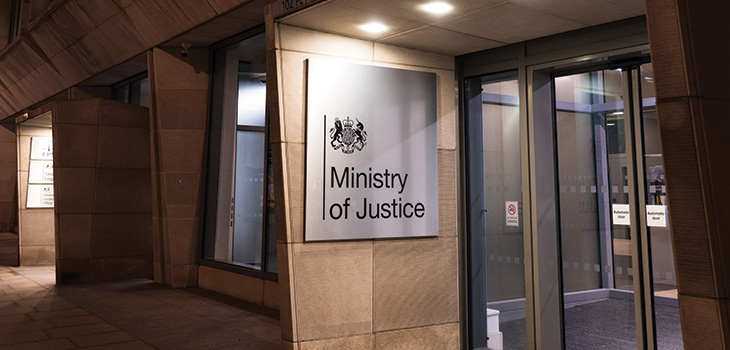
Ministry of Justice: Careful evaluation needed

Dr Jeffrey Wale shares his concerns about the non-party document access pilot

The Transparency and Open Justice Board (TOJB), introduced by the Lady Chief Justice in April 2024, has now crystallised its key objectives for delivering open justice. These objectives develop three broad themes. First, courts and tribunals should promote open justice to enable the public to understand and scrutinise the administration of justice; and thereby seek to uphold public confidence and support improved public understanding of their constitutional role. Second, the principles of transparency and open justice generally require the proceedings and decisions of courts and tribunals to be open and accessible to everyone, supporting and promoting the reporting of proceedings and any related decisions. There are practical issues about how this second objective is delivered, but as a starting point, it would include granting non-parties access to relevant court documents. Third, open justice involves a default position that is subject to certain derogations imposed by statute—for example, certain types of reporting restriction. Where derogations from open justice are granted by the courts, they should be applied clearly, consistently and

If you are not a subscriber, subscribe now to read this content
If you are already a subscriber sign in
...or Register for two weeks' free access to subscriber content

MOVERS & SHAKERS

Gateley Legal—Jack Kelly

Gateley Legal—Jack Kelly

Gateley Legal expands Midlands residential development team

Gibson Dunn—Richard Surtees

Gibson Dunn—Richard Surtees

Gibson Dunn adds employee benefits and executive compensation practice in London with partner Richard Surtees

Laytons ETL—Alec Cameron

Laytons ETL—Alec Cameron

Laytons ETL appoints new partner and head of intellectual property disputes

NEWS
A series of recent decisions has clarified important principles across property law, from perpetuities to lease renewals and public rights over land
Employers cannot rely on wellbeing services alone to defend workplace stress claims after a High Court decision awarding almost £1m to an overworked employee
Andy Burnham's brand of 'Manchesterism' could offer fresh thinking on legal aid and access to justice if it reaches Westminster, according to Roger Smith, NLJ columnist and former director of JUSTICE
The constitutional fallout from a change of prime minister, rather than the politics, is under scrutiny as questions arise over the limits of executive authority in a leadership transition
The legal profession is undergoing a fundamental shift from selling services to creating technology-enabled products, according to Professor Luke Mason, Head of School of Law at Regent's University London
back-to-top-scroll
