header-logo header-logo

16 January 2026
Issue: 8145 / Categories: Legal News , Copyright , Artificial intelligence , Intellectual property , Technology
printer mail-detail

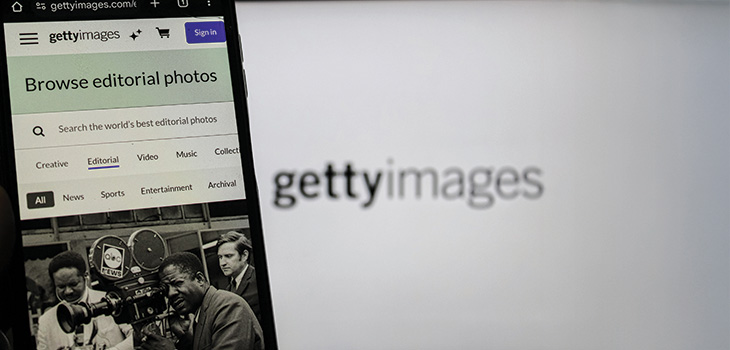
NLJ this week: Failure to deliver in Getty v Stability AI

240104
The long-awaited Getty Images v Stability AI judgment arrived at the end of last year—but not with the seismic impact many expected. In this week's issue of NLJ, experts from Arnold & Porter dissect a ruling that is ‘historic’ yet tightly confined

The High Court found limited trade mark infringement where AI-generated images reproduced Getty watermarks, but rejected broader claims of dilution, passing off, and secondary copyright infringement. Crucially, the court held that AI models are not, in themselves, infringing copies of their training data.

The article explains why Getty’s evidential hurdles proved decisive: contrived prompts and small samples were not enough to show real-world infringement in the UK.

The authors argue the case sets a demanding standard for future AI claims, requiring robust, jurisdiction-specific evidence tied to actual user behaviour. For rights-holders and developers alike, the lesson is clear—speculation will not substitute for proof in the AI age.

MOVERS & SHAKERS

Anthony Collins—20 promotions

Anthony Collins—20 promotions

20 promotions mark major people investment at national law firm, Anthony Collins

Sidley—Elaine Whiteford

Sidley—Elaine Whiteford

Sidley adds competition litigator Elaine Whiteford in London

Charles Russell Speechlys—Claudina D’Costa

Charles Russell Speechlys—Claudina D’Costa

Charles Russell Speechlys welcomes Claudina D’Costa as Director of Client Development Marketing

NEWS
The 25th Pro Bono Week begins today until 6 November, with events hosted by law firms, chambers, law schools and charities across the UK
Pro bono is celebrating a silver anniversary, with initiatives putting businesses and students at the heart of access to justice
Choosing the wrong expert can cost a clinical negligence claimant more than their case
Judges risk weakening their own independence by staying silent over government reforms, a leading public lawyer argues
A discount on damages does not automatically mean an equivalent haircut for legal costs in military deafness claims
back-to-top-scroll