


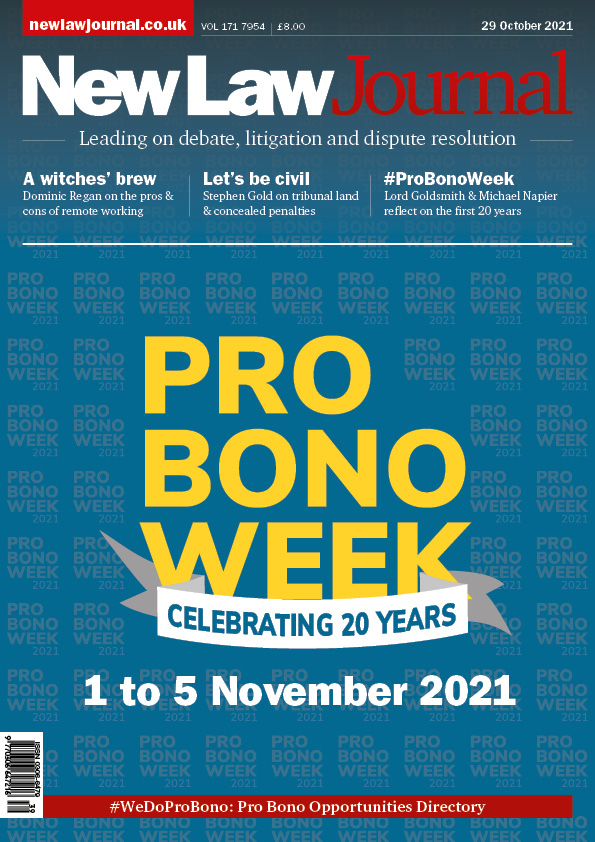
This year’s event looks ahead to the next two decades as well as spotlighting key cases from the past.
Toby Brown, chair of the Pro Bono Week organising committee, said: ‘Last year’s Pro Bono Week saw 50 online events involving 5,000 lawyers, students and members of the charity sector discuss the challenges, and best practice, in providing pro bono during a pandemic.
‘This year, we are looking forward to taking stock at both in person and online events and discussing how in the coming years we can continue to encourage and support the profession’s pro bono efforts.’
There is something for everyone, from students to late career pro bono, and from practical tips for law clinic volunteers to advice on forming partnerships between law firms and in-house clients, as well as a Pro Bono Opportunities Directory (attached). While climate action features strongly on the agenda, there is also an event on vicarious trauma and self-care, and a contract negotiation workshop for small charities (see http://probonoweek.org.uk/events).
The launch event will take place in person and online, and will host a panel of speakers including the Attorney General, exploring the past, present and future of pro bono. Other highlights include a panel event on the rule of law and access to justice with Baroness Hale, Baroness Helena Kennedy QC, Law Society president I Stephanie Boyce and others. For a full list, see www.probonoweek.org.uk.
To set the mood and show our support, this week’s NLJ is a pro bono special edition. Features include an interview with Lord Goldsmith, former Attorney-General, and Irwin Mitchell partner Michael Napier, who both played key roles in the creation of Pro Bono Week. In a separate article, former leaders of the three main professional bodies, the Law Society, Bar Council and CILEX, look back at key moments in pro bono.
Elsewhere in the magazine (which if free to view here) judge and National Pro Bono Centre board member Sir Robin Knowles heralds the versatility and dedication of lawyers to pro bono, which can be fun, for example, ‘zigzagging across remoter parts of Wales’ or dispensing advice from a double decker bus.





